
Black Church Leaders Gather, Discuss Democracy in America’s 250th Year | Interfaith America
Earlier this summer, Black Church leaders gathered at Ebeneezer Baptist Church in Atlanta to discuss the Historically Black Protestant Churches community’s role in the past and the future of American democracy. Participants reflected on how the Black Churches have shaped the pursuit of liberty in this nation throughout its history.
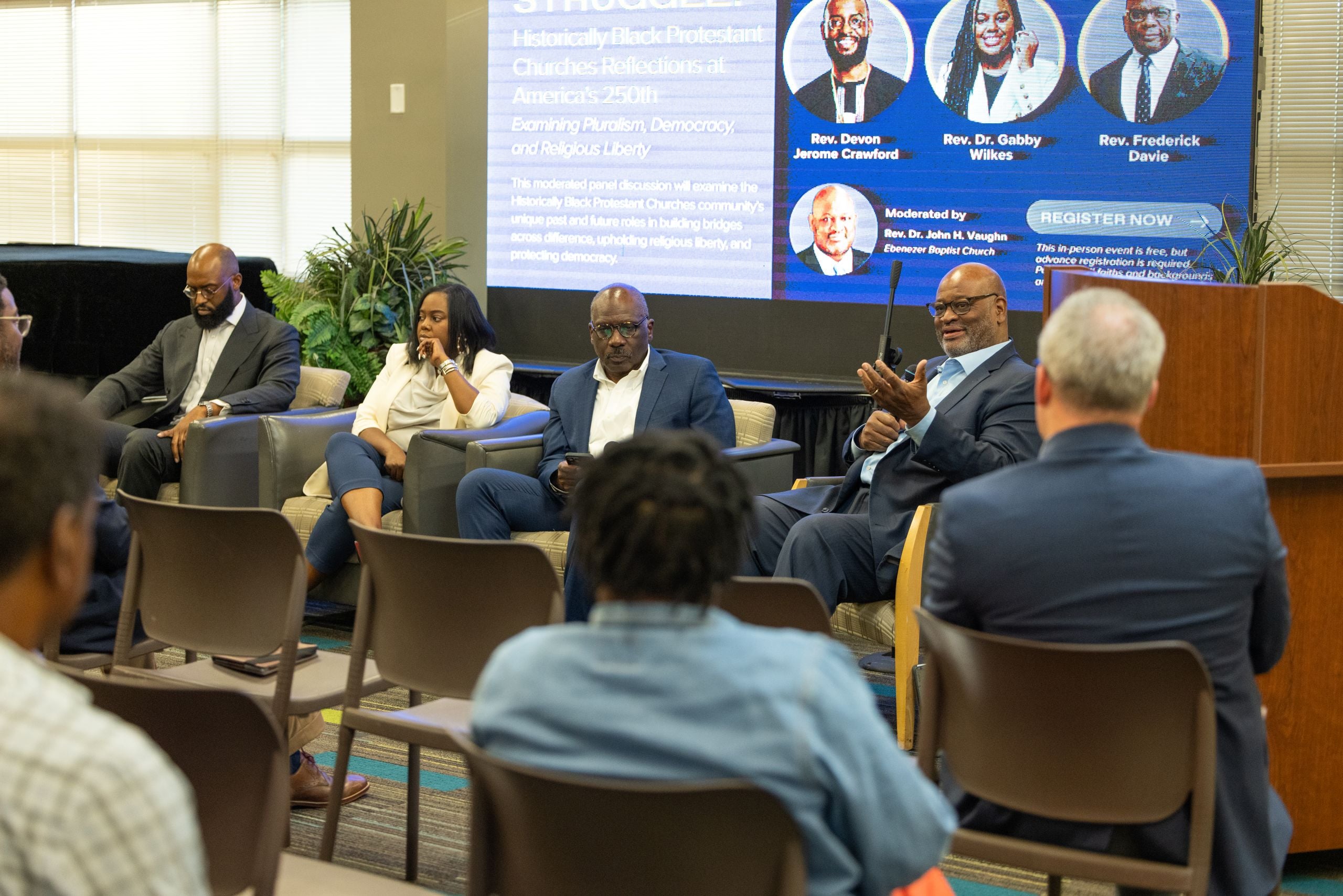
“Black Churches have been doing pluralism work since our inception,” reflected Senior Executive Vice President of Union Theological Seminary, Rev. Fred Davie. “We’ve done it both out of necessity … we’ve done it also because the faith we embrace compels us to do it. It compels us to love neighbor, to look out for those who are hungry and in need, not to give up on the democratic project that we call America.”
Attendees addressed their callings to serve their communities by modeling interfaith leadership.
Lead Pastor of the Double Love Experience Church in New York City, Dr. Gabby Cudjoe Wilkes, said, “as faith leaders, we have a moral compelling to put aside those ideological and sometimes theological differences in order to make sure that we’re serving those that we care about in our city.”
As leaders look to the future, they are informed by values and the voices that have come before them.
“The challenge for us for the next 250 years,” said Dean of Wake Forest University’s School of Divinity, Dr. Corey D.B. Walker, “is to begin to utilize those resources, to mobilize them in new ways, to introduce them to new generations, so that they may experience a broader and deeper democracy and a broader and deeper experience of being human in the world.”
In the United States’ 250th year, Interfaith America’s Faith-Specific Convenings bring together particular communities of faith and conscience in intra-faith dialogue to discuss the history and future of religious liberty and pluralism in their traditions.
Originally published at Interfaith America.
About the Wake Forest University School of Divinity
Founded in 1999, Wake Forest University School of Divinity is a graduate, professional school that is Christian by tradition, Baptist in heritage, and ecumenical in outlook. Guided by the University’s motto, Pro Humanitate, the School prepares leaders informed by a theological understanding of vocation and equipped to serve as agents of justice, reconciliation, and compassion in a complex world. The School offers masters and doctoral degree programs including dual degree programs in bioethics, counseling, education, law, management, and sustainability.
Media Requests
Director of Marketing, Communications, & Public Relations
Wake Forest University, School of Divinity